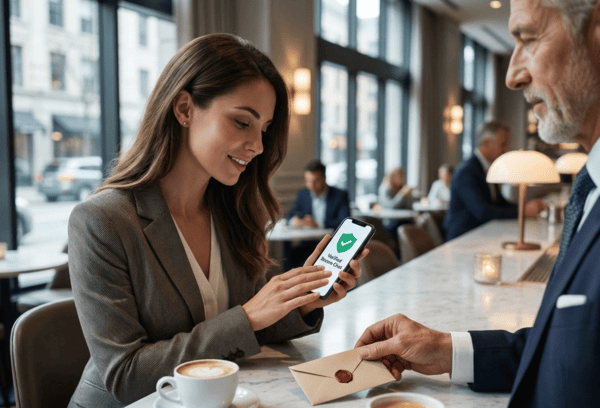
Entering the sugar bowl is exciting. It opens doors to a lifestyle of luxury, mentorship, and financial freedom that traditional dating rarely offers. But let’s be real: with high rewards come specific risks. As we move through 2026, the digital landscape is evolving—and so are the tactics used by bad actors.
Whether you are a seasoned pro or just curious, the question on everyone’s mind should be: Is sugar daddy dating safe?
The short answer is: Yes, but only if you are smart about it.
First, let’s dismantle the fear. To navigate these risks effectively, you must first understand what is a sugar baby and how the dynamic fundamentally differs from traditional dating.
Safety isn’t just about carrying pepper spray (though that’s not a bad idea); it’s about digital hygiene, financial literacy, and spotting red flags before they become problems. This guide is your “big sister” manual to navigating the world of sugar dating securely, ensuring that your experience remains positive, empowering, and scam-free.
Table of Contents
Is Sugar Daddy Dating Safe? The Reality Check
First, let’s dismantle the fear. Sugar dating, at its core, is just a specialized form of modern dating. Like Tinder or Hinge, it involves meeting strangers from the internet. The difference lies in the expectations. Because money and lifestyle are involved, sugar dating attracts two types of predators: scammers looking for a quick payout and fakes looking for free attention.
However, reputable platforms like SugarDaddyMeet.com invest heavily in verification processes. The danger usually arises when you take the conversation off the platform too quickly or ignore your intuition.
Your safety mantra for 2026: Skepticism is not rude; it is a survival skill. A legitimate POT (Potential Sugar Daddy) will respect your boundaries. If they don’t, they aren’t a daddy—they’re a danger.
Sugar Dating Online: Protecting Your Identity
Before you even upload your first photo, you need to lock down your digital footprint. In an era of reverse image searching and AI data scraping, anonymity is your best friend.
1. The Burner Number Rule
Never, under any circumstances, give out your real phone number to a stranger you haven’t met.
- Use Apps: Services like Google Voice, TextNow, or Burner allow you to text and call without revealing your actual digits.
- Why it matters: Your real number is often linked to your social media, your address, and even your family records. A burner number creates a firewall.
2. Photo Hygiene
A common mistake beginners make is using the same photos on their sugar profile as they do on Instagram or LinkedIn.
- The Risk: A simple reverse image search can lead a stranger straight to your workplace or university.
- The Fix: Take fresh, exclusive photos for your sugar profile. If you must use an old photo, crop it or flip it to alter the digital fingerprint.
3. Keep Socials Separate
Do not link your personal Instagram or TikTok to your sugar profile. If a POT asks for your social media to “verify you are real,” you can politely decline or offer a video call instead. Real Daddies value discretion just as much as you do; they won’t push for a public link to your private life.
How to Spot a Fake Sugar Profile: The 2026 Red Flags
In 2026, fake profiles have become more sophisticated, sometimes utilizing AI-generated images or chatbots. However, they almost always slip up. Here is how to spot a fake profile quickly.
The “Too Good to Be True” Bio
If a profile promises an allowance of $5,000/week before even meeting you, it is a lie. Real Sugar Daddies negotiate. They want to see if there is chemistry. Scammers use astronomical numbers to blind you to the reality of the situation.
The Generic or AI Photo
Does he look like a stock photo model? Is the lighting suspiciously perfect?
- The Test: Ask for a specific, low-effort photo. “Send me a selfie of you holding a spoon” or “What does your view look like right now?” A real person can snap this in seconds. A catfish cannot.
The “I’m Not in Town” Narrative
A classic sign of a sugar daddy scam is the POT who claims to be a wealthy businessman currently “traveling for work” or “stationed overseas.” He wants to set up a relationship now but can’t meet for three weeks.
- The Reality: Legitimate Daddies want to meet. If they are traveling, they will wait until they are in your city to connect.
3 Sugar Daddy Scams: Real-World Scenarios to Watch For
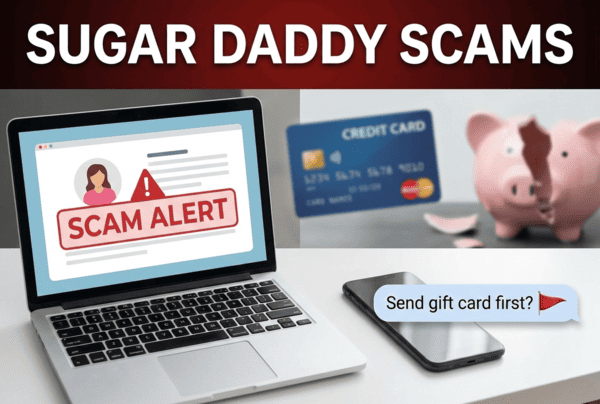
Scammers prey on hope and financial desperation. Understanding the mechanics of a sugar daddy scam is the best way to inoculate yourself against it. Here are three generalized examples of common scams circulating in 2026.
1. The “Bank Info First” Scam
- The Pitch: A POT texts you immediately, saying he wants to put you on his payroll. He asks for your bank login details, routing number, or Zelle info to “deposit your allowance.”
- The Trap: A real Daddy never needs your login info. He only needs a CashApp tag or a PayPal link. If you give banking details, they will drain your account, not fill it.
- Rule: Never share banking login credentials. Ever.
2. The “Pre-Payment Fee” Scam
- The Pitch: “I’m trying to send you $2,000, but my business account requires a ‘verification fee’ of $50 from you first.” Or, “I’ll send you a check for $3,000; you keep $2,000 and send $1,000 to my assistant for travel expenses.”
- The Trap: The check is fake. It will bounce days later, but the $1,000 you sent to the “assistant” (the scammer) is gone forever from your own funds.
- Rule: Money should only flow to you. You should never pay to be a sugar baby.
3. The “Gift Card” Grifter
- The Pitch: He claims his credit card is maxed out or frozen, and he needs you to buy an iTunes, Amazon, or Steam gift card for him, promising to reimburse you double tomorrow.
- The Trap: Once you send the code, he vanishes.
- Rule: Wealthy men do not need college students to buy them gift cards.
The First Date: Mastering the Meet & Greet (M&G)
You’ve found a POT who seems real, the chat is flowing, and he’s ready to meet. This is the “Meet and Greet.” This is a non-negotiable step for sugar dating safety.
Public is Non-Negotiable
Your first meeting must always be in a public, well-lit space. A coffee shop, a busy restaurant, or a hotel lobby bar are perfect.
- Red Flag: If he insists on you coming to his home, his hotel room, or a secluded area for the first date, block him. A legitimate gentleman understands the need for safety.
The “Lifeline” Protocol
Before you leave your house:
- Share Location: Send your live location to a trusted friend.
- The Details: Text that friend the POT’s name, photo, and phone number.
- The Check-In: Set a time to text your friend (e.g., 30 minutes in). “If I don’t text you by 8:00 PM, call me.”
Transport Independence
Never let a POT pick you up at your home for a first date.
- Why: You don’t want him to know where you live yet, and you don’t want to be trapped in his vehicle if things go south.
- The Fix: Uber to a nearby location (not your exact doorstep) or drive yourself. If he wants to pay for travel, he can send you an Uber voucher or cash at the date.
Financial Safety: Verification Without Vulnerability
Money is the trickiest part of the dynamic. How do you verify he’s real without being rude?
Cash is King (Initially)
For the first few dates or the first allowance payment, cash is the safest method. It leaves no paper trail and cannot be reversed (unlike some digital payments).
- Tip: If he hands you an envelope, do not be afraid to count it or check it quickly in the restroom.
Digital Payment Hazards
Apps like Venmo or CashApp are convenient, but be careful.
- Privacy: Ensure your username on these apps doesn’t reveal your full legal name.
- Reversals: Be wary of PayPal “Friends and Family” vs. “Goods and Services.” Scammers can dispute transactions.
Never Rely on “Pending” Funds
If a POT shows you a screenshot of a “pending” transfer and asks for intimacy or a favor, wait. Funds must be cleared and usable before you proceed with any part of the relationship. Screenshots can be Photoshopped.
Emotional and Mental Safety: The Overlooked Element
Safety isn’t just about physical security; it’s about protecting your peace. The sugar bowl can be emotionally taxing if you don’t have strong boundaries.
Define Your Boundaries Early
Be clear about what you are—and are not—comfortable with.
- Are you okay with PDA?
- Is the relationship exclusive?
- What are your sexual boundaries?
- How often will you text?
State these clearly before the relationship begins. A man who pushes these boundaries early will only get worse later.
Beware of Manipulation (Love Bombing)
Some toxic individuals use “love bombing”—overwhelming you with compliments and promises of a future—to manipulate you into lowering your guard or your financial expectations.
- The Reality Check: If he says he loves you after one date but hasn’t provided any support, he is likely a “Salt Daddy” (someone who wants sugar without giving sugar).
The Power of “No”
Remember: You are the prize. You have the power to walk away at any moment. If a situation feels uncomfortable, you do not owe anyone politeness. You owe yourself safety.
Trust Your Gut: The Ultimate 2026 Safety Tool
Technology helps, and guidelines are great, but your intuition is your biological supercomputer. It picks up on micro-cues that your conscious mind might miss.
- Does his story have tiny inconsistencies?
- Does he get angry when you ask simple verification questions?
- Do you feel a knot in your stomach when you think about meeting him?
If the answer is yes, listen to it. In the world of sugar dating, if it feels off, it is off.
Staying safe on sugar dating sites requires a mix of street smarts, digital privacy, and unshakeable confidence. By following these sugar dating safety tips, you can filter out the noise, avoid the scams, and focus on finding a generous, respectful partner who adds value to your life.
Stay sweet, stay smart, and stay safe.
Frequently Asked Questions (FAQ)
Is it safe to give a Sugar Daddy my ID for verification?
No. Never give your driver’s license, passport, or social security number to a Sugar Daddy. Identity theft is a real risk. If a site requires ID verification (like SugarDaddyMeet.com), that is safe because they are a regulated business. But a random user asking for ID is a major red flag.
How do I accept money safely without revealing my real name?
Crypto is the most anonymous method, but CashApp and Venmo are more common. Create a specific email address just for these apps that doesn’t use your real name. Ensure your display name on the app is your “Sugar Name” or a pseudonym.
What should I do if a Sugar Daddy threatens to “expose” me?
This is blackmail, and it is a crime. First, do not pay them—they will never stop asking for money. Second, document everything (screenshots of texts and profiles). Third, report them to the dating platform immediately so they can be banned. In severe cases, contact local authorities.
Can I be a sugar baby if I want to stay completely anonymous?
You can maintain a high level of privacy (using a fake name, burner phone, and no face photos initially), but eventually, you will have to meet in person. Total anonymity is impossible in a physical relationship, but you can control who gets to know your real identity and when.
Is it a scam if he wants to move to WhatsApp immediately?
Not always, but it is a “yellow flag.” Scammers like to move off dating apps quickly to avoid being banned by the site’s safety algorithms. It is perfectly acceptable to say, “I prefer to chat here until we’ve met in person.” A real Daddy will respect that.